
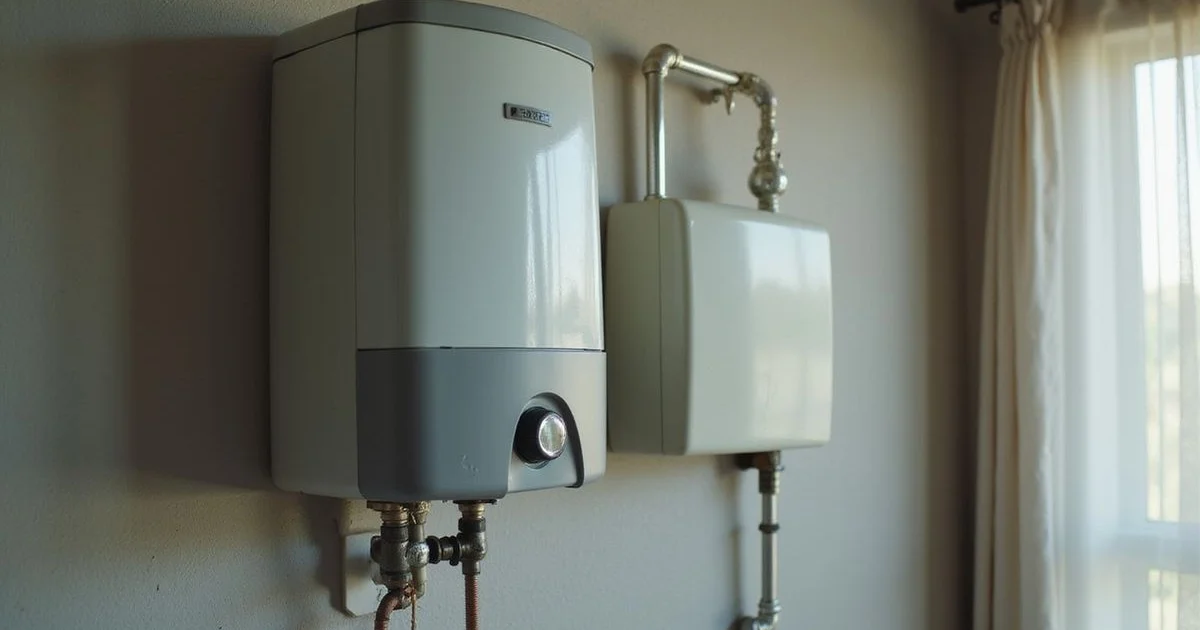
What “cycling” actually means
A booster pump that clicks on every minute or two, runs for a few seconds, then clicks off again is short-cycling. The cycle should normally last much longer — the pump runs, builds pressure, switches off, and the pressure tank slowly releases that pressure as taps are used. Only when pressure drops below a set point does the pump kick on again.
When that cycle compresses to seconds instead of minutes, something is wrong. For water pump repair, this is one of our most common call-outs.
The three usual causes
A failing pressure switch. The switch controls when the pump starts and stops. When it ages, the gap between its cut-in and cut-out points narrows, and the pump starts running on the smallest pressure drop. New switch, problem solved.
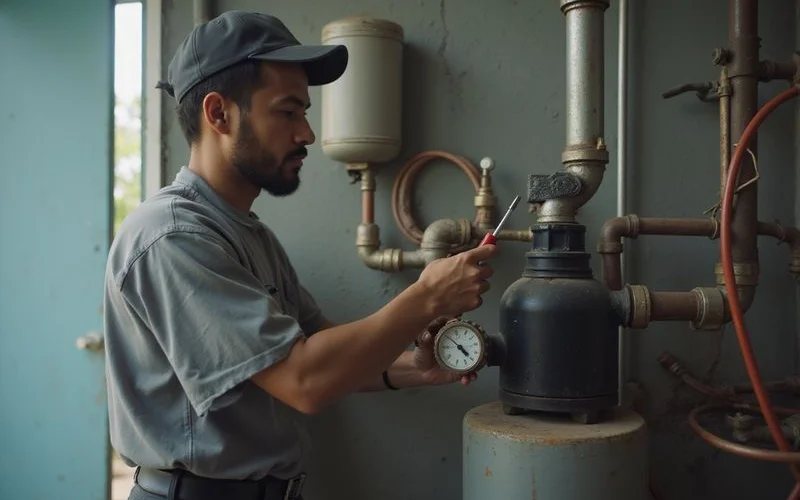
A waterlogged pressure tank. The pressure tank inside the system holds water and an air cushion. The air cushion is what releases pressure gradually as taps are used, so the pump can stay off. If the air bladder fails, the tank fills with water, the cushion is gone, and every tap turned on triggers an instant pump start. Re-pressurising or replacing the tank fixes it.
A small leak in the system. Even a slow, invisible drip somewhere in the supply pipework lets pressure drop continuously. The pump keeps coming on to maintain it. This is often missed because there’s no visible water — only the pump cycling and a creeping water bill.
Quick checks you can do safely
Walk around the house with all taps closed. Listen for any drip, look at the meter (is it moving?), check under sinks and around the water heater for damp patches. If everything looks dry and the meter isn’t moving, the issue is almost certainly at the pump itself — switch or tank.
If the meter is moving with taps off, there’s a leak somewhere in the system. That’s its own problem to trace.
Why short-cycling matters even if it “still works”
Some homeowners get used to the clicking and ignore it. The trouble is that every start-stop cycle wears the pump motor, the switch, and the seals faster than steady running. A pump short-cycling for months has often used up most of its life by the time it fails — and at that point, repair vs replace gets closer to “replace.”
Catching short-cycling early is usually a cheap switch replacement. Catching it after the motor has burnt out is a new pump.
When to call us
If the cycle is happening every few seconds and there’s no obvious external leak, give us a call. We arrive, test the switch and tank, check for hidden leaks, and recommend the fix — usually a switch replacement, a tank recharge, or finding the leak.