
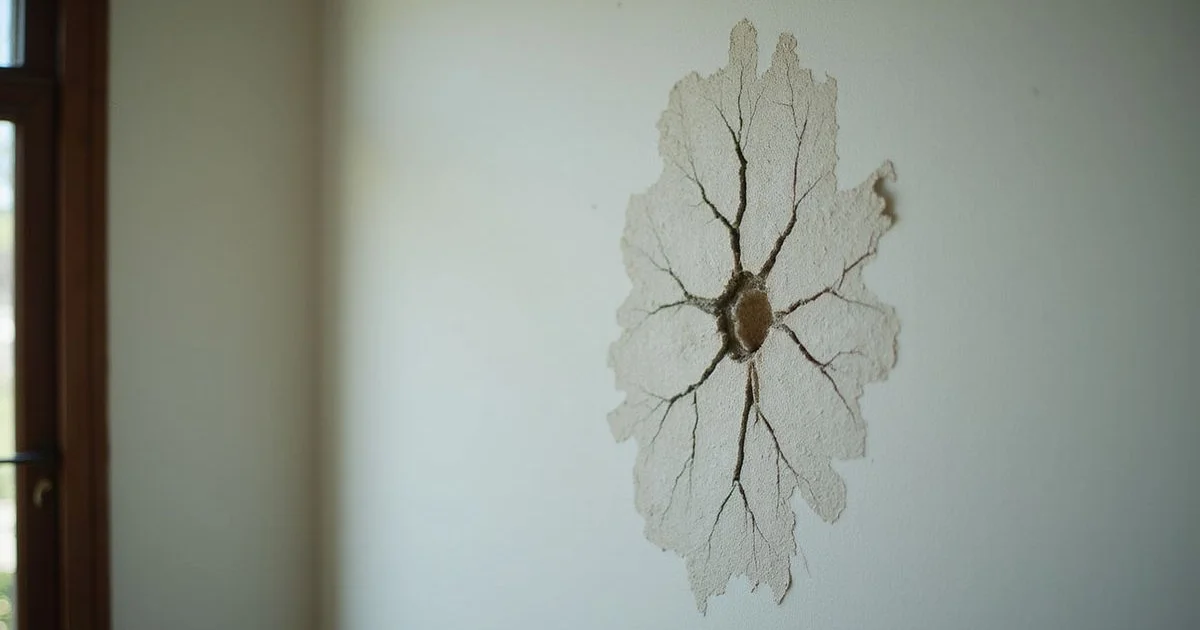
Not every crack is a problem
We understand that seeing a jagged line form across your living room wall causes instant panic. Knowing exactly how to fix cracked walls and damp starts with recognizing that most minor fissures are purely cosmetic.
From what we see daily in older Saujana Damansara and Petaling Jaya homes, that 35°C afternoon heat is the real driver behind natural building expansion.
Plaster and skim coat are rigid layers over a substrate that constantly shifts. We assess every site for wall repair and renovation to determine whether a defect is cosmetic, structural, or driven by a hidden leak. Small surface cracks that remain stable and dry are generally easy to patch.
Knowing the difference saves you from unnecessary worry and prevents you from ignoring serious warning signs.
Cracks that are usually cosmetic
Cosmetic cracks are superficial flaws, usually measuring less than 2.0 millimetres wide, that only affect the paint or plaster layer. They occur from normal building settling or thermal movement and do not impact the load-bearing capacity of your walls.
- Hairline cracks: Fine lines under two millimetres wide that often look like spiderwebs.
- Horizontal cracks: Straight lines appearing along plaster boundaries or drywall joints.
- Stable corner cracks: Fissures near window frames or doors that have not changed in size for years.
- Surface-only cracks: Blemishes that stop at the top layer and do not penetrate the concrete substrate underneath.
We highly recommend using an elastomeric acrylic coating for these minor fixes instead of standard rigid plaster. Products like Nippon Flex 200 or Pentens T-200 cost around RM75 to RM80 for a 5kg tub in Malaysia.
A professional wall crack repair using flexible compounds bridges stationary gaps and easily handles the thermal expansion common in tropical climates. This approach holds for years and prevents the same web pattern from reappearing after a few hot months.
Cracks that need professional inspection
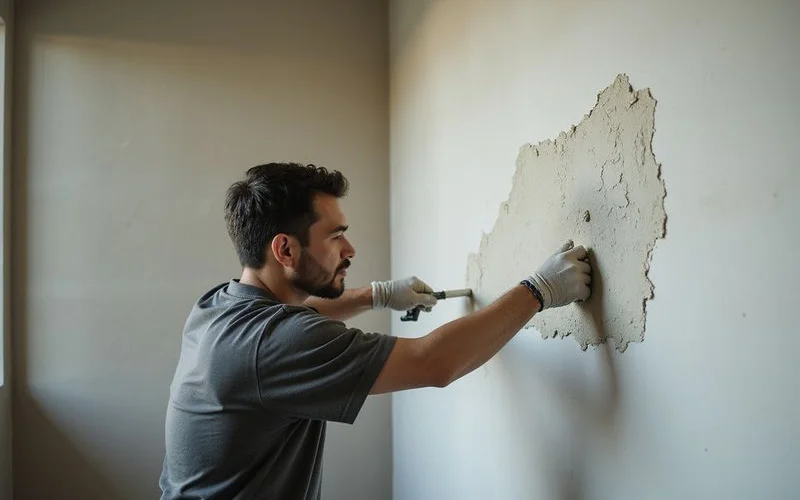
Structural cracks pose a direct threat to your building’s integrity and require immediate expert evaluation. These severe fractures are typically wider than 5.0 millimetres and often signal ongoing differential foundation movement.
- Wide gaps: Any separation spreading beyond a few millimetres needs urgent attention.
- Diagonal stair-step cracks: Jagged lines travelling through brickwork corners indicate active soil settlement.
- Active growth: Fissures that visibly lengthen or widen over a period of weeks or months.
- Moisture-tracking cracks: Gaps showing dark damp staining mean water is actively penetrating the building envelope.
- Structural element damage: Splitting across load-bearing pillars or main support walls.
- Sudden appearance: Major shifts that open rapidly without an obvious external cause.
We frequently utilize Polyurethane (PU) injection technology to address these critical structural failures. A basic professional inspection in Malaysia starts around RM300, and it is the only way to accurately diagnose deep concrete faults.
The PU resin is injected directly into the void, where it expands to form a watertight, structural seal. Patching over a structural defect with standard filler just hides the problem while the underlying deterioration continues.
What causes damp patches
A damp patch on wall surfaces always indicates an active moisture intrusion, stemming from leaking pipes, roof damage, or poor ventilation. The water often travels horizontally along beams and concrete slabs before becoming a visible stain.
- Concealed Plumbing Leaks: Old galvanized iron pipes are a notorious source of hidden water damage in many 30-year-old terraced houses across Malaysia. These metal pipes corrode quickly in our high humidity, developing tiny pinhole leaks behind the plaster. The resulting dampness often shows up at the lowest point the water reaches. We advise homeowners to review our check for a hidden leak guide to identify early warning signs.
- Roof and Membrane Failures: Water from a degraded roof or a failed bathroom membrane frequently tracks down through upper-floor slabs. We often see top-floor bathrooms leaking into the ceiling void, causing massive dark stains in the adjacent bedrooms below. Diagnosing this specific path requires inspecting the structural elements directly above the damp spot.
- Rising Moisture: Capillary action pulls groundwater up through the masonry in older buildings lacking a proper damp-proof course. This phenomenon usually manifests as a continuous band of bubbling paint near the base of an external wall. Our repair teams treat this by installing specialized chemical damp-proofing barriers to block the moisture path permanently.
- Condensation: High ambient humidity creates severe condensation issues in poorly ventilated Malaysian bathrooms and kitchens. Water vapour lands on cooler wall surfaces, forming damp-looking patches and promoting black mould growth. Improving exhaust ventilation and applying anti-fungal paint are the most effective fixes.
Why surface repair alone often fails
Painting over a wet spot or filling a gap without fixing the root cause guarantees the problem will return. Water continues to enter through the original source, while ongoing structural shifts easily break apart standard cosmetic fillers.
| Repair Approach | Immediate Result | Long-Term Outcome (6-12 Months) |
|---|---|---|
| Surface Patch Only | Looks clean and fixed | Cracks reopen, paint blisters, moisture returns |
| Root Cause Treatment | Requires drying time | Permanent fix, stops structural decay |
We see a familiar pattern where property managers paint over a stain, only to watch it blister and peel three months later. These repeated breakdowns represent a fundamental failure in treating the symptom while ignoring the plumbing disease.
Trapped moisture degrades the masonry and releases harmful volatile organic compounds into your indoor air. A long-lasting repair demands stopping the water or stabilizing the movement first to avoid returning to square one.
How we approach the repair
Our methodology prioritizes accurate diagnostics and permanent stabilization over rapid, temporary cover-ups. Advanced tools and strict drying protocols ensure every repair outlasts the next monsoon season.
For a damp patch: We deploy non-destructive technologies like infrared thermographic scanning to find hidden leaks without hacking into your floorboards. This specialized equipment pinpoints the exact moisture source quickly and accurately.
- Inspect and Identify: Pinpoint the plumbing leak, degraded roof membrane, condensation, or rising moisture.
- Fix the Source: Execute the necessary pipe repair, roof waterproofing, or damp-course injection.
- Enforce Drying Time: Allow the masonry to dry out fully, which can take weeks depending on Malaysia’s ambient humidity.
- Apply Skim Coat: Plaster and skim coat the affected area using moisture-resistant compounds.
- Final Finish: Allow proper curing time before applying a breathable, anti-fungal paint.
For a structural or growing crack: Our team approaches wide fissures by addressing the foundation or load-bearing stress first. This sequence ensures the wall can handle future thermal shifts without splitting again.
- Structural Assessment: Inspect the site to understand if the foundation movement is ongoing or settled.
- Address the Cause: Stabilize the underlying soil or distribute the heavy load causing the stress.
- Inject Polyurethane: Use appropriate PU injection fillers that can accommodate small future movements while sealing the gap.
- Surface Restoration: Plaster, skim coat, and re-paint the wall to blend perfectly with the original finish.
The primary aim is delivering a resilient repair that holds firm. Understanding how to fix cracked walls and damp properly saves you from constant, repetitive patching. Contact our inspection team today if you notice any spreading gaps or spreading water stains in your property.