When repair stops being worth it
Water heaters usually give plenty of warning before they fail completely.
The real question is rarely about whether it is broken, but rather if it makes financial sense to fix it one more time.
Our team frequently sees homeowners in Petaling Jaya and Saujana Damansara spending too much on temporary patches.
Knowing the right water heater replacement timing saves you from sudden cold showers and expensive water damage. Clear indicators exist to help you decide between a quick fix and a full replacement.
1. No hot water or unreliable heating
If your showers fluctuate randomly between freezing and boiling, the internal heating element or thermostat is failing. This inconsistency is one of the most common reasons a water heater is not working correctly.
Replacing a faulty thermostat can sometimes solve the issue for a few months. A second or third failure within a single year indicates the entire system is breaking down.
We often find that hard water buildup, common in parts of the Klang Valley, coats the heating elements and causes them to overheat and crack.
Consider these typical repair costs versus replacement:
- Thermostat replacement: RM150 to RM250.
- Heating element replacement: RM200 to RM350.
- New instant unit (e.g., Joven or Panasonic): RM350 to RM800.
Chasing multiple failed components on a unit older than five years rarely makes financial sense. Upgrading provides reliable temperatures and immediate peace of mind.
2. Leaks at the tank or connections
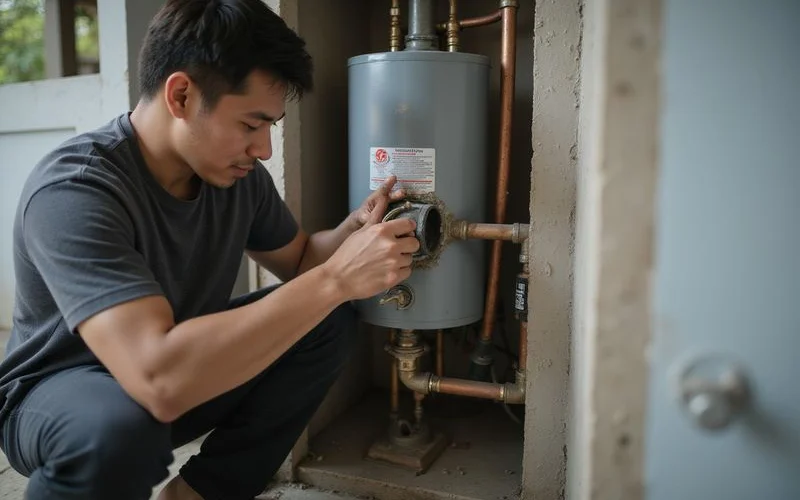
A pool of water beneath your storage tank means the internal structural integrity has failed, and you need a new unit immediately. Once the actual body of the tank starts leaking, it cannot be safely patched or resealed.
Our technicians regularly respond to flooded bathrooms caused by ignored tank corrosion.
Tank decay is a continuous process that worsens rapidly. Once a single pinhole leak appears, the internal pressure will quickly force new holes to open.
“A compromised storage tank is a ticking time bomb for water damage, especially if installed in a concealed ceiling space common in modern Petaling Jaya properties.”
Water dripping near electrical connections creates a massive safety hazard. Puddled water also ruins plaster ceilings and surrounding cabinetry in multi-storey homes.
3. A breaker that trips every time the heater runs
A tripped electrical breaker every time you turn on the shower points directly to a dangerous short circuit. This fault usually means the heating element is drawing excessive current due to internal casing damage.
Sometimes, a degraded wire or a faulty breaker switch is the actual culprit. Often, the appliance itself is pulling too much power and forcing the Residual Current Circuit Breaker (RCCB) to trip.
We strictly follow Suruhanjaya Tenaga safety guidelines, which mandate that tripping water heaters must be inspected immediately.
Ignoring a tripping breaker can lead to fatal electrocution.
Here is a quick troubleshooting sequence:
- Reset the breaker switch once.
- Turn on the water heater.
- If it trips immediately again, leave it off.
- Call a certified electrician or plumber.
Installing a new element sometimes resolves the short circuit temporarily. If the tripping continues, the entire appliance requires replacement.
4. Rust stains around the unit
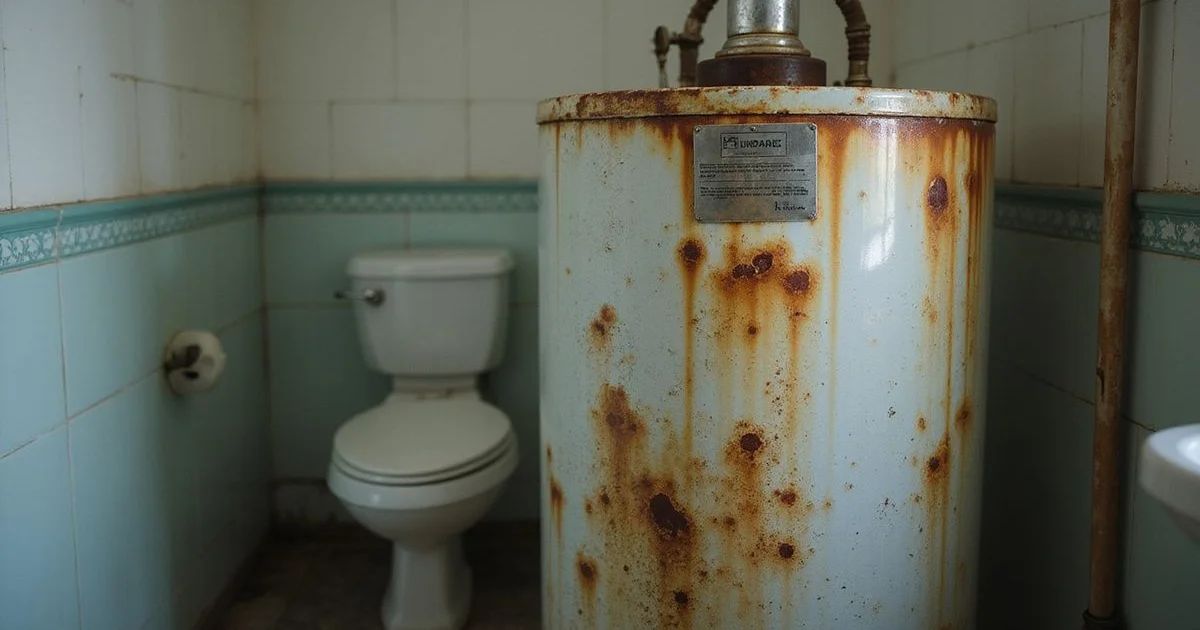
Visible rust on the outside seams of your tank or discoloured brown water flowing from your showerhead signals severe internal corrosion. This decay eats through the metal casing and almost always precedes a catastrophic leak.
Malaysia’s high ambient humidity accelerates external rust on metal fittings, but surface rust can usually be cleaned. Internal rust originating from the tank body itself is irreversible and compromises the water quality.
Our experience shows that reddish-brown tap water is a guaranteed sign the internal sacrificial anode rod has completely dissolved.
| Rust Location | Severity Level | Recommended Action |
|---|---|---|
| Inlet/Outlet Pipes | Moderate | Clean, reseal, and monitor closely. |
| Tank Seams/Base | Critical | Replace unit immediately. |
| Brown Shower Water | Severe | Replace unit immediately. |
Catching these rust warning signs early prevents sudden tank ruptures while you are away from home.
5. The unit is at end of expected life
Most residential storage and instant water heaters last between 7 and 10 years before their efficiency drops drastically. After a typical service life, internal components weaken, and small electrical faults appear much more frequently.
Our records show that units pushed past the decade mark cost significantly more in monthly Tenaga Nasional Berhad (TNB) electricity bills.
Upgrading to a new appliance gets you the latest energy efficiency improvements. Continued repairs on an outdated model only buy you a small, expensive extension of time. Modern units feature better insulation and more responsive heating elements.
Signs a water heater needs replacing due to age include:
- It takes twice as long to heat up.
- The unit makes loud rumbling or popping noises.
- Water pressure drops significantly when the hot tap is open.
Swapping out an old, inefficient unit is almost always the smarter financial decision.
Why a leaking heater shouldn’t wait
Leaving a leaking heater switched on creates a severe electrocution hazard and guarantees expensive property damage. You must isolate the power and water supply the moment you notice a puddle.
Our emergency teams treat leaking heaters as high-priority calls because the water damage compounds rapidly.
If you spot staining on the ceiling below a concealed tank, take immediate action.
Follow these exact steps if you find a leak:
- Switch off the main breaker for the unit.
- Close the isolation water supply valve to the heater.
- Call us to assess the situation and install a new unit.
We schedule most replacements within a day or two of your initial call. Keeping the supply valves shut in the meantime prevents the leak from destroying your home.
Picking a replacement type
Choosing the right system depends entirely on your household size, daily routines, and current bathroom layout. If your old unit served you perfectly, swapping a storage tank for a new storage tank is a fast, straightforward process.
Our installation teams will help you evaluate your specific requirements if your family size has grown.
Understanding whether a storage or instant system fits better now ensures you never run out of hot water again. Reviewing these options thoroughly guarantees you get the most efficient setup for your daily needs. Identifying all the replace water heater signs early protects your property and your wallet.