The core difference
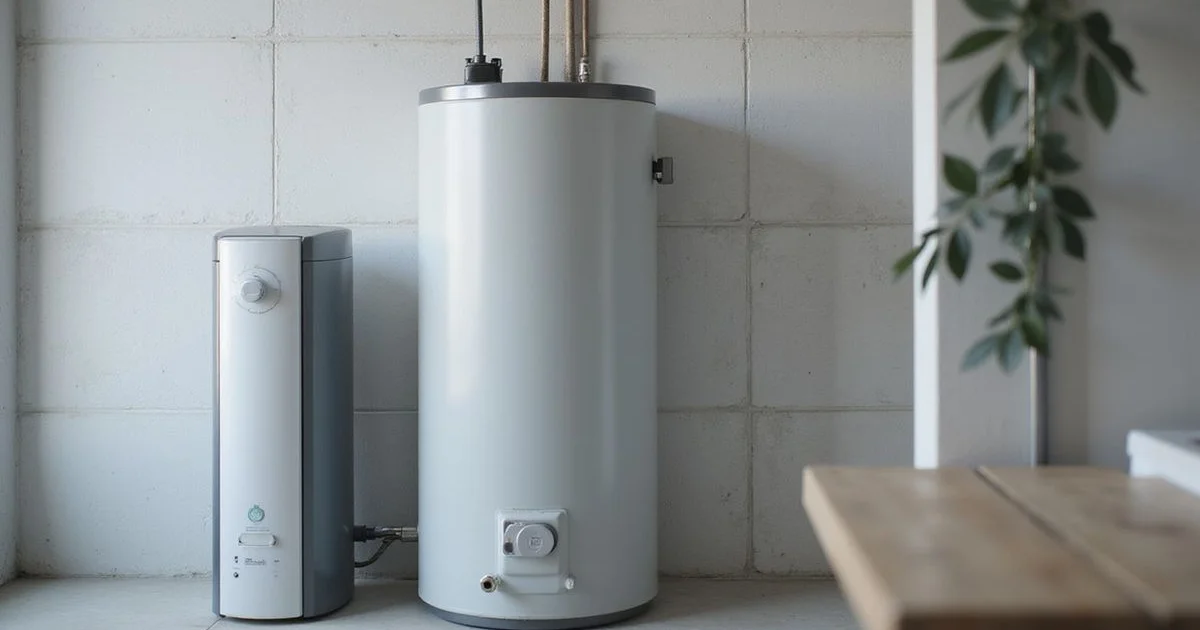
A storage water heater has a tank that holds heated water continuously, ready to dispense when a hot tap is opened. An instant water heater has no tank — it heats cold water on-the-fly as you draw it.
That single difference drives everything else: cost, capacity, space, energy use, and which households each suits. For water heater installation we recommend based on the actual usage pattern, not a one-size-fits-all rule.
Storage water heaters
A storage heater works by keeping a tank of water at temperature. When you turn on a hot tap, that pre-heated water flows out. The tank refills with cold water, which the unit then reheats to be ready for next time.
Strengths:
- Steady hot water at multiple outlets simultaneously
- Constant flow rate regardless of demand
- Better suited to families needing parallel hot water use
- Mature, well-supported technology
Trade-offs:
- Tank takes up space (often in a ceiling void or utility area)
- Standby heat loss — the tank loses heat slowly even when not in use
- Larger upfront cost for higher-capacity units
- Eventually runs out during heavy use until it reheats
Instant water heaters
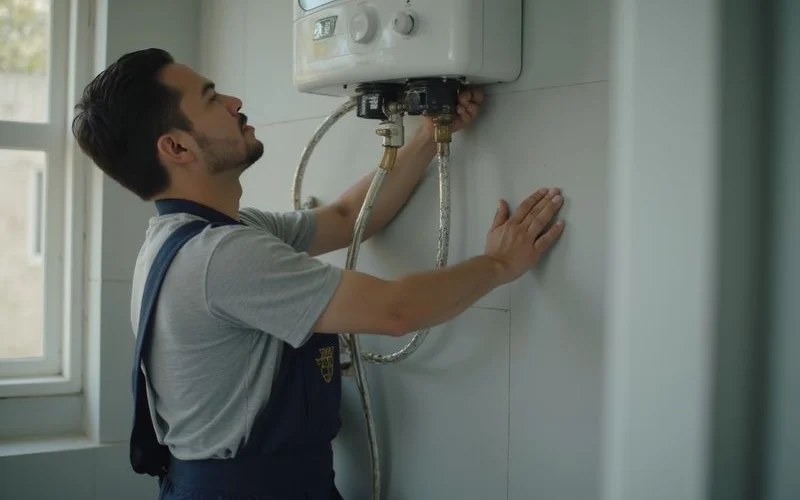
An instant heater has no tank. When you turn the tap on, the unit detects flow and starts heating the water as it passes through the element. It heats only when needed.
Strengths:
- Compact wall-mount, saves space
- No standby heat loss when not in use
- Hot water doesn’t run out — keeps heating as long as flow continues
- Lower upfront cost for single-point installations
- Common, well-supported in Malaysia
Trade-offs:
- Limited by flow rate — won’t supply two showers at once at full flow
- Higher peak electrical demand when running
- Heat output varies more with incoming water temperature
- Less suited to households where multiple hot outlets run together
Picking by household scenario
Small flat or studio, one bathroom, single occupant: Instant heater. Compact, efficient at this usage level, and meets all demand comfortably.
Family of three in a two-bathroom landed home: Could go either way. A mid-size storage heater handles parallel showers well. A larger instant unit also works if peak draw is rare. We advise based on how often hot water is used simultaneously.
Family of four to six, three or more bathrooms, all in use parallel: Storage heater, properly sized. The tank capacity handles parallel demand without flow-rate compromises.
Guest bathroom or pool-side shower with occasional use: Instant heater. No standby loss for a unit used a few times a week.
Cost and running considerations
Upfront, a single instant unit is cheaper than a storage heater of comparable household coverage. Running cost depends entirely on usage pattern — instant wins where use is intermittent, storage can win where use is frequent enough that standby loss is small as a proportion of total energy.
Lifespan for both is usually many years with maintenance. Failures tend to be at the heating element or tank for storage, the element or controller for instant.
If you’re unsure which fits, the capacity-choosing question is the next step regardless of which type you pick.