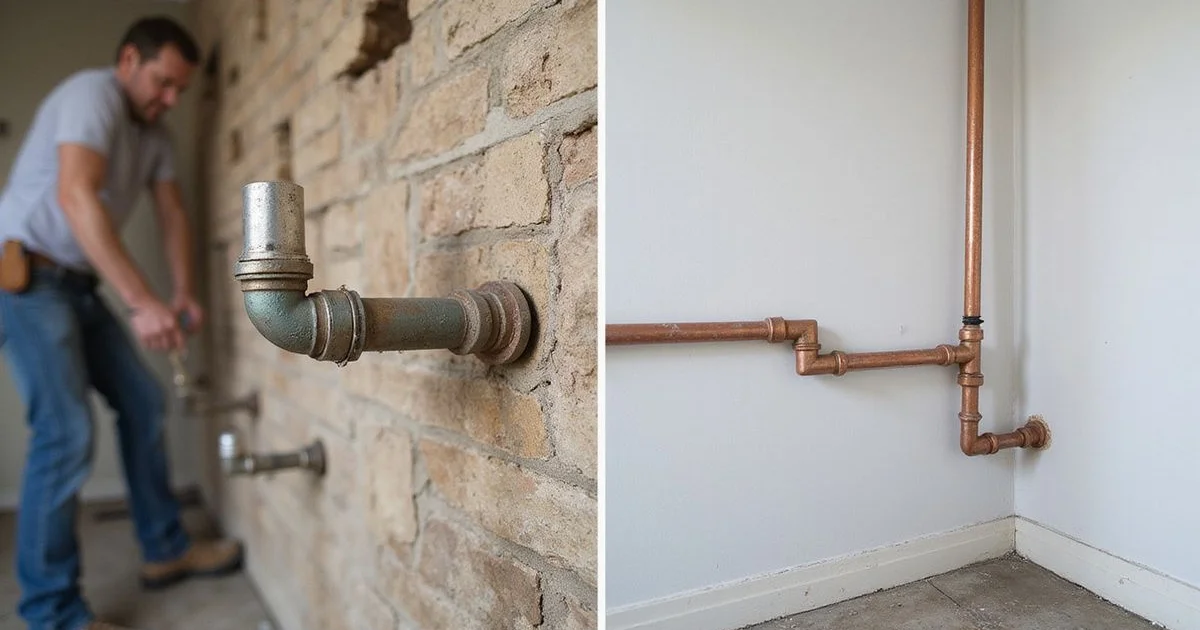
We frequently see homeowners struggle with deciding on a pipe repair vs repipe project.
That hesitation is completely understandable when you are balancing budget constraints against the risk of water damage.
Our team knows that making the wrong choice usually leads to paying for the very same plumbing problem twice.
Let’s look at the actual failure points we see in local properties, what these warning signs mean, and how to choose the most cost-effective path forward.
When a spot repair is enough
A single, isolated leak in an otherwise healthy plumbing system is exactly when a targeted spot repair is the right choice. Fixing just that failed connection is straightforward and cost-effective if the rest of your pipes show no warning signs.
We typically see normal Air Selangor residential water pressure sitting comfortably between 20 and 40 psi. A localized repair makes sense if your home maintains that steady pressure level across all taps.
Our pipe repair and repiping service handles spot repairs as the standard approach when the system tests fine otherwise.
Here are the specific conditions that make spot repair appropriate:
- The leak is at a specific, identifiable joint or fitting
- Water pressure across the rest of the house is steady
- No discoloured (brown) water from other taps
- No history of leaks elsewhere in the past year or two
- The pipework itself looks sound where visible
We find that completing a quick fix is the smartest financial call under those exact conditions.
When repiping wins
Repiping is the definitive winner when your property experiences system-wide failures, frequent leaks, or severe internal corrosion. Replacing the entire network stops the expensive cycle of constant patching and restores full water volume.
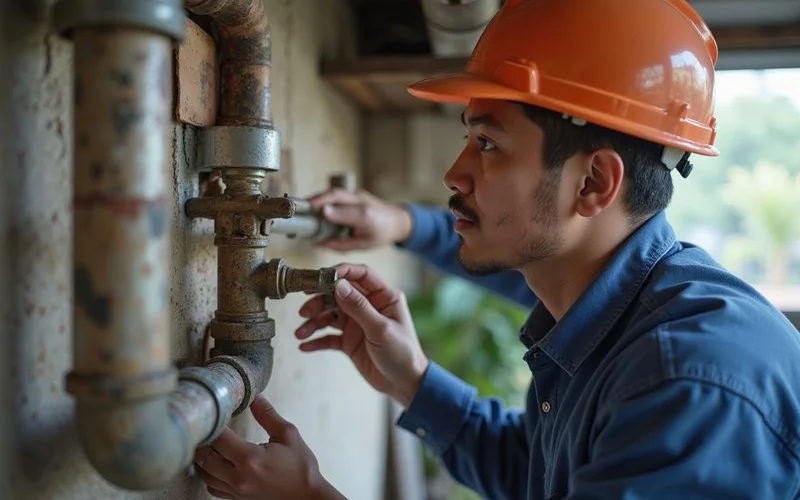
We see a very different picture when the pipework itself is failing system-wide rather than at one point. The classic case in Petaling Jaya is an older landed home with original Galvanised Iron (GI) pipework that has started corroding from the inside.
Our experience shows that the reasons galvanised pipes fail apply across the whole network, not just one section. An unexpected doubling of your monthly water bill often signals these hidden, widespread leaks.
Signs that point toward a full system replacement include:
- Multiple leaks within the past 12 to 24 months
- Brown discoloured water from several taps
- Noticeable system-wide pressure drops below 20 psi
- Visible internal corrosion when pipework is opened
- The home is more than 30 years old with original GI supply lines
We know that chasing individual leaks turns into an expensive, repeating cycle when several of those symptoms appear at once. A complete overhaul replaces the failing materials cleanly and ends the constant frustration.
Cost and disruption trade-offs
A spot repair provides an immediate, cheaper fix, but a full repipe offers long-term financial predictability. You must calculate what is likely to happen over the next two or three years to make the most cost-effective choice.
We recognize that a targeted fix is faster and cheaper than a complete system overhaul. The real calculation needs to include what will likely happen over the next few years, not just the immediate emergency at hand.
Our clients often spend more on multiple emergency call-outs if they try to patch an obviously failing system. The second leak shows up within months, the third within the year, and suddenly you have paid for several sections of wall to be opened and patched.
The Pipe Repair vs Repipe Cost Comparison
| Feature | Spot Repair | Full Repipe Upgrade |
|---|---|---|
| Typical Cost (PJ Area) | RM150 to RM500 per visit | Varies by property size |
| Time to Complete | 1 to 3 hours | 2 to 4 days |
| Material Used | Matches existing pipe | SIRIM-certified PP-R or PEX |
| Long-Term Reliability | Low (if system is old) | High (50+ year lifespan) |
We highly recommend upgrading to SIRIM-certified PP-R (Polypropylene Random Copolymer) pipes during a planned repipe to eliminate this stressful cycle. The replacement option easily wins the debate when your property faces recurring failures.
Our teams typically complete a whole-house replacement in a PJ landed home across two to four days. The work is carefully staged so that fresh water remains available to most of the house throughout the project.
How home age guides the decision
The age of your property is the most reliable indicator of whether you need a minor fix or a major upgrade. Homes built within the last 25 years generally only require spot repairs, while older homes often demand a complete system replacement.
We find that system-wide failure is quite rare for houses under 25 years old equipped with copper, PVC, or modern PEX pipework. Targeted maintenance is almost always the right call for these newer properties.
Property Age Benchmark: Many clients ask us, “should I repipe my house?” If your Petaling Jaya home was built before 1995 and still uses the original plumbing, you are operating well past the safe lifespan of galvanized steel pipes.
Our perspective changes drastically for homes built 30 to 50 years ago in mature neighbourhoods like Damansara Jaya or SS2. Much depends on whether the original supply lines were upgraded along the way.
We will assess on site whether replacing the worst runs or completing a full system overhaul is the smarter move if the house still relies on original galvanised steel. These old GI setups are squarely in their failure window.
Our honest recommendation process
Our assessment process relies on transparent, verifiable testing rather than guesswork. The inspection covers visible connections, water pressure measurements, and a clear recommendation based on hard data.
We refuse to push a massive overhaul when a simple fix is clearly the right call. It is equally important that no one recommends patching a deeply compromised system just to land a quick, smaller job.
The Professional Inspection Standard
- Pressure Diagnostics: Testing against the standard 20 to 40 psi baseline.
- Acoustic Scanning: Finding hidden leaks behind walls without breaking tiles.
- Material Assessment: Checking the corrosion levels of visible pipe sections.
Our team uses these professional diagnostics to tell you exactly what is happening behind your walls. The water flow gets tested across different sections so we can share our findings directly with you.
We provide a completely transparent breakdown of your system’s health. You will always get an honest answer about which option makes the most sense financially and practically for your pipe repair vs repipe decision.
Reach out to our team today to schedule your comprehensive pressure and leak assessment.