
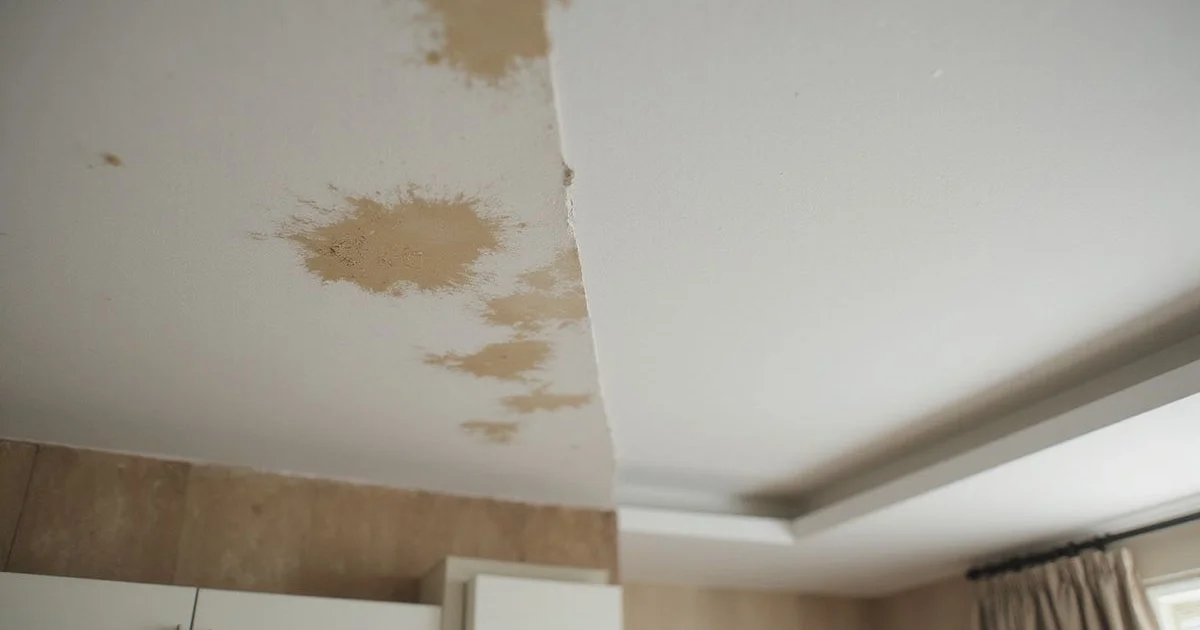
Spotting a sudden brown water stain on your office or living room ceiling usually triggers an immediate urge to just seal it up fast.
Our team completely understands that instinct to grab a ladder and apply a quick sealant. However, the critical distinction most property owners miss is identifying if the water intrusion is isolated or systemic, leading to the big debate of a ceiling leak patch vs waterproofing.
We will break down the data behind these failures, explain what the warning signs look like, and outline a clear roadmap for your next steps. Let’s look at the actual facts, what they mean for your property, and how to choose the most cost-effective repair strategy.
When a patch holds and when it doesn’t
Faced with a ceiling stain or active drip, the obvious response is to patch it. Sometimes that localized repair is the right call, while other times it just throws money at a symptom while the underlying problem keeps spreading.
For ceiling leak and waterproofing, we look closely at whether a targeted patch will genuinely hold or whether broader treatment is required. Petaling Jaya and the wider Klang Valley receive a staggering average annual rainfall of over 2,500 millimetres. This immense volume of water means a temporary fix will only survive if the surrounding concrete and waterproofing membrane remain completely intact.
Our inspection process always starts by tracing the moisture path back to its true source. A failure to identify the root cause is precisely why efforts to fix a ceiling leak temporarily often result in repeated, frustrating call-outs. Property managers must recognise that surface-level caulking is powerless against trapped hydrostatic pressure.
The Golden Rule of Leaks: A patch only works when the surrounding system is 100% healthy. Otherwise, the water simply finds the next weakest point.
When a targeted patch is appropriate
A targeted patch is highly effective when the water ingress is isolated to a single, easily identifiable defect. This approach secures the structure quickly without requiring a massive budget.
For instance, a single hairline crack in an otherwise structurally sound concrete slab is a textbook candidate for this method. Our technicians frequently perform PU injection grouting on these specific isolated cracks.
The polyurethane resin chemically reacts with trapped moisture to expand and permanently seal the entire cavity. This targeted treatment is usually completed in a single day.
We recommend a targeted patch only when specific conditions are met. Consider these criteria before approving a minor repair:
- The leak source is definitively isolated to one specific spot.
- The rest of the roof or overlying waterproofing membrane is entirely sound.
- There is absolutely no history of previous leaks in the adjacent areas.
- The root cause is understood and stable, meaning it is not actively growing or shifting.
Most minor injection repairs start at a minimum call-out rate of around RM 450 in Malaysia. This makes the procedure a fraction of the cost of a full overhaul, provided the surrounding slab continues to do its job.
When full waterproofing is needed

The picture changes entirely when the underlying moisture barrier is failing on a broad scale. Full roof waterproofing becomes mandatory once the primary membrane loses its elasticity and structural integrity.
Our assessment criteria shift when multiple risk factors converge on a single property. The intense Malaysian climate creates extreme thermal shock, where a scorching midday sun is suddenly interrupted by freezing monsoon downpours. This rapid temperature swing forces concrete roofs to expand and contract aggressively.
Over time, this thermal stress creates a continuous network of map-like micro-cracks across the surface. We observe that standard localized repairs simply cannot bridge these widespread structural movements. The right answer is to strip the failed layer completely and re-do the job properly.
Here are the undeniable signs that complete re-waterproofing is required:
Multiple and Recurring Leak Points
Patching multiple leak points across a roof or ceiling turns maintenance into an exhausting, endless treadmill. Water constantly exploits the next weakest link in the degrading system.
Aged and Deteriorated Materials
When a liquid applied or torch-on membrane reaches the end of its useful life, it often peels away or completely loses adhesion to the substrate. Localized repairs merely delay the inevitable failure by a few weeks.
Visible Widespread Damage
Inspectors look for clear deterioration during site visits. When you spot several of these issues simultaneously, ending the repair cycle with a comprehensive replacement is the most cost-effective path. We actively document signs of failure, including:
- Massive structural cracks across the concrete.
- Bubbling or blistering protective layers.
- Obvious physical separations in the waterproof coating.
The pattern we see most often
Plenty of ceiling leak calls follow an incredibly predictable and frustrating arc. A new leak suddenly appears, gets patched quickly, holds for a few months, and then inevitably returns.
Our teams frequently encounter this exact scenario, where the water either drips from the exact same spot or finds a new path just inches away. The property owner applies a second patch, but this one holds for an even shorter duration.
The Temporary Trap: Relying on silicone or mastic during the November to March monsoon season virtually guarantees a failure within three to six months.
By the third or fourth failed attempt, they realise the cheap strategy has failed and finally call a professional to do it right.
If we had been consulted on that very first patch, the outcome would have been drastically different. The technician would have evaluated the entire flat roof or concrete slab and stated honestly that the structure requires broader treatment.
By the time we receive that third desperate call, the same honest answer applies. The tragic difference is that the owner has now wasted hundreds of ringgit on temporary sealants and suffered months of unnecessary water damage.
How we decide on a site visit
An accurate diagnosis usually comes from inspecting the whole roofing system, rather than just staring at the localized leak point. We utilise specialised diagnostic equipment to eliminate the guesswork.
Our inspectors bring advanced tools like FLIR thermal imaging cameras and Protimeter moisture meters to map the exact, hidden path of the water intrusion. This data-driven approach allows the team to look beyond the surface level.
We carefully evaluate several critical elements before making a final recommendation:
Condition of the Existing Surface
Is the rest of the waterproofing membrane entirely intact, or is it showing the same severe deterioration as the active leak point? Widespread degradation demands a comprehensive fix.
Age of the Installation
Approaching the manufacturer’s intended end of life means even sound-looking sections are essentially ticking time bombs. A ten-year-old membrane will likely fail soon, regardless of how good it currently looks.
History of Previous Leaks
Is this truly the first leak in the building, or the third? A documented pattern of recurring repair points directly to a systemic, underlying failure.
Drainage and Ponding Water
Are there specific sections where ponding water sits stagnant for days? Poor drainage actively breaks down protective coatings and significantly shortens the lifespan of any waterproofing system. We typically flag drainage issues if we observe:
- Water pooling for more than 48 hours after rain.
- Blocked or undersized gutter outlets.
- Algae growth indicating constant dampness.
Based on these specific visual and diagnostic findings, we recommend either a targeted treatment or full re-waterproofing. You will receive an honest expectation of how long a small patch should hold, alongside the detailed cost and timeline for a complete overhaul.
We absolutely refuse to push a massive replacement job when a minor fix is appropriate. Similarly, a reputable contractor will never paper over a failing, rotted system with cheap patches that are destined to fail.
Cost comparison and decision timing
A targeted repair treatment typically costs much less than a full surface re-waterproofing and is normally completed in just a day or two. However, a full membrane replacement costs more upfront and takes longer, but it permanently addresses the underlying root cause of the moisture.
Our clients often struggle with deciding between these two options. To make the ceiling leak patch vs waterproofing choice clearer, evaluating the average 2026 market rates in Malaysia provides a helpful baseline for budgeting.
We always advise running a simple break-even calculation. If you are highly likely to need two or three separate patch jobs over the next three years, biting the bullet on full waterproofing is statistically cheaper in total.
Here is a straightforward cost comparison for common Malaysian roof repairs:
| Repair Strategy | Average Estimated Cost (MYR) | Expected Longevity | Best Application |
|---|---|---|---|
| Targeted PU Injection (Single Point) | RM 450 to RM 800 per trip | Long-term for that specific crack | Isolated concrete hairline cracks |
| Temporary Surface Patching | RM 200 to RM 400 | 3 to 6 months | Emergency stops during heavy monsoon |
| Full Membrane Waterproofing | RM 8 to RM 15 per square foot | 5 to 10+ years | Aged roofs, recurring systemic leaks |
If the damage is genuinely a one-off event and the rest of the drainage system is sound, the targeted approach saves a significant amount of money.
We make sure to provide you with both quotes whenever both paths are viable options. You will get an honest, professional recommendation outlining exactly which route the team would choose if this were our own personal home.
Making the right decision regarding a ceiling leak patch vs waterproofing directly protects your property value and your peace of mind.
Our main priority is ensuring you stop throwing good money after bad.
If you are tired of battling the same stubborn leak every time the rain falls, schedule a comprehensive diagnostic site visit with a certified specialist today.