
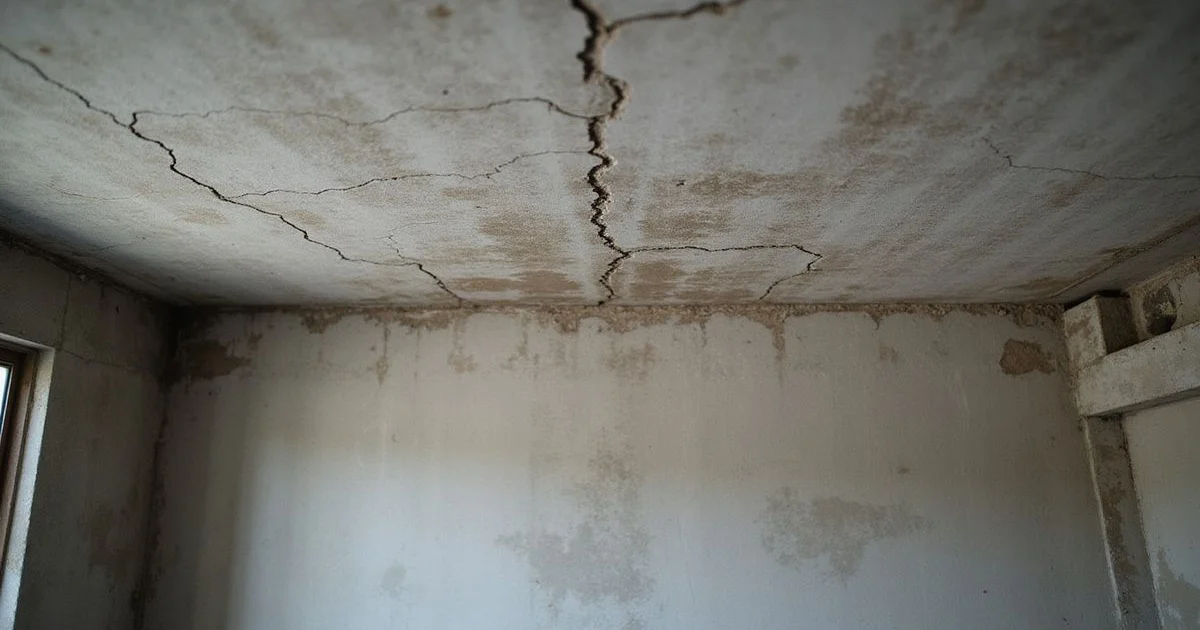
Why ceiling leaks rarely come from where they look
The stain on your ceiling tells you water is getting in somewhere — but rarely tells you exactly where. Water tracks along concrete, insulation, beams, and tile until it finds a low point, then drips. The visible damage might be metres from the actual entry point.
For ceiling leak repair, the first task is always to find the real source. Treating the stain without finding the entry guarantees a return visit.
The four main causes of concrete ceiling leaks
1. Concrete slab cracking
Concrete slabs can crack over time from settlement, thermal movement, or stress. Even hairline cracks let water through, especially under pressure from ponding water above or driving rain.
Cracks may be visible on the upper surface (roof or balcony above), on the underside (ceiling), or both. Sometimes they’re internal and only show as a wet patch on the ceiling with no obvious surface crack.
2. Failed or aged waterproofing membrane
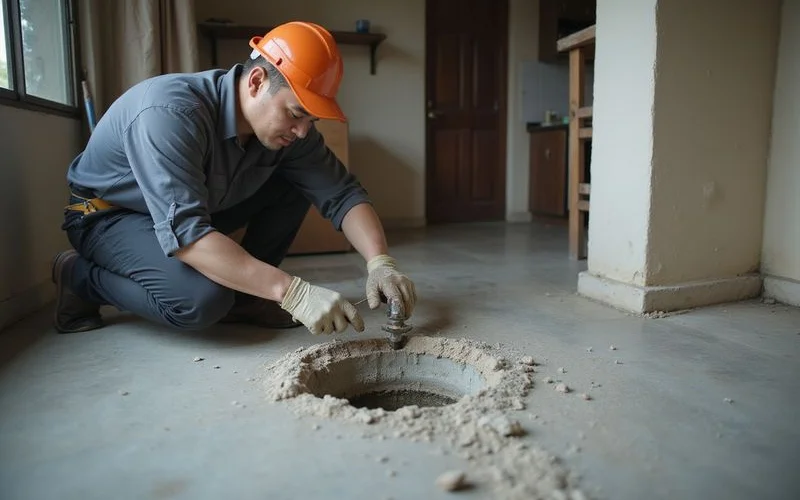
Flat concrete roofs, balconies, and bathroom floors are typically protected by a waterproof membrane. Over time, membranes age, crack, or lose adhesion. Once water finds a path through, it tracks under the membrane and into the slab.
A membrane that was installed badly fails fastest — incorrect sequence, insufficient cure time, or poor surface preparation all shorten the useful life dramatically.
3. Plumbing leak from the floor above
The “ceiling leak” might not be a ceiling leak at all — it can be a plumbing leak in the bathroom or kitchen on the floor above. Pipes embedded in slabs, leaking shower trays, and overflowing fixtures all drip down through the slab and stain the ceiling below.
Distinguishing a plumbing leak from a roof or membrane leak matters because the fix is completely different. A pipe leak fixed with roof waterproofing keeps leaking.
4. Monsoon and ponding water
Heavy rain finds every weak point. Slabs that drain poorly accumulate ponding water during monsoon — and that standing water exerts pressure on any membrane weakness or crack underneath.
If your ceiling only leaks during heavy rain (and not during a typical shower), ponding water on the slab above is a likely cause. The fix involves both treating the surface (re-sloping, re-waterproofing) and ensuring drainage actually works.
How we find the source
A site visit usually narrows it down quickly:
- Visible crack on slab above? That’s a high-confidence cause.
- Wet ceiling only during heavy rain? Ponding or membrane failure.
- Wet ceiling at all times, not weather-related? Plumbing leak above is the strongest candidate.
- Bathroom directly above the wet patch? Test for fixture or floor membrane leak first.
- Stain pattern that doesn’t match heavy rain timing? Pipe leak almost certain.
Sometimes we use moisture meters and thermal imaging to confirm. The aim is to find the actual entry point, not guess.
Why finding the source matters
Treating the visible damage without finding the source is one of the most common (and expensive) mistakes in ceiling repair. We’ve been to plenty of homes where the ceiling has been patched two or three times because each repair only addressed the symptom.
Once you know what’s actually leaking — slab crack, failed membrane, plumbing, or ponding — the right fix becomes obvious. Our patch vs full waterproofing guide covers how to choose between targeted and comprehensive treatment.