
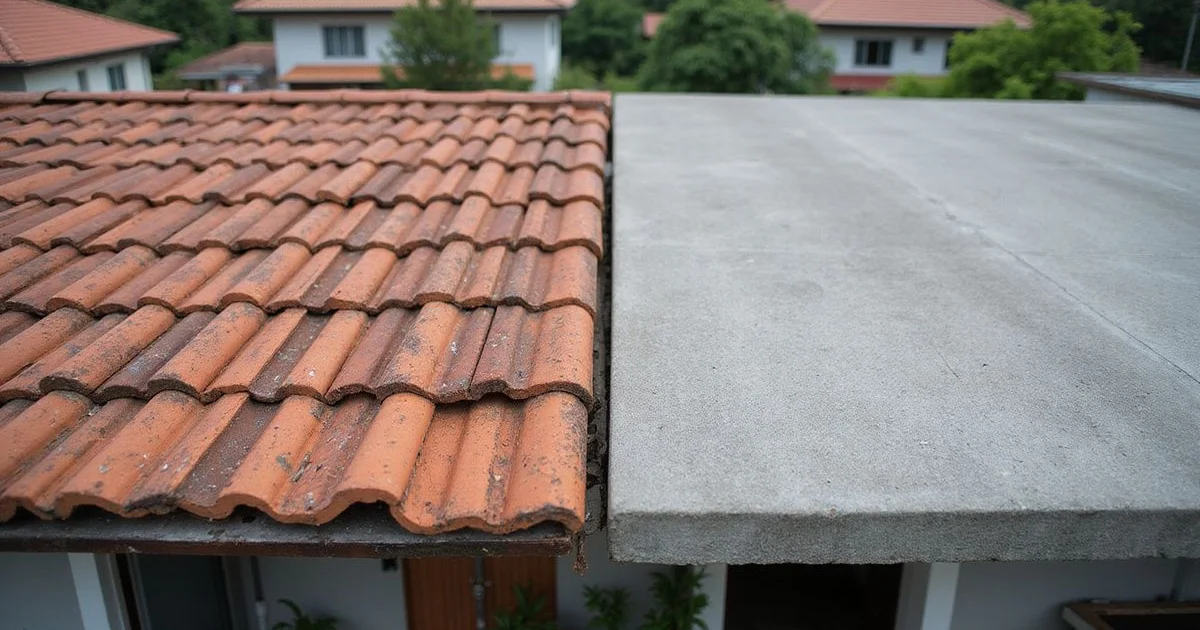
Two roof types, two waterproofing approaches
Petaling Jaya receives roughly 2500mm of rainfall every single year. This volume of water makes correct roof waterproofing methods a critical priority.
Tiled and flat concrete roofs require completely different systems to stay dry.
Our team evaluates your specific roof type before recommending any repairs. The materials that succeed on a concrete slab will fail on clay tiles. A quick visual inspection reveals the necessary plan of attack.
We approach every roof waterproofing service project differently from the moment we arrive. Let’s examine the specific methods required for each roof type and review the costs involved.
Tiled roof waterproofing
Tiled roofs shed water naturally through gravity. The slope and overlap of individual tiles direct rainwater down into the gutters. The actual waterproofing system is a combination of hidden layers working together beneath the surface.
Our technicians frequently see issues with popular local materials like Monier tiles. A cracked tile is rarely the main culprit behind a major ceiling leak. The real problems usually start at the junctions and the cement edges.
Essential Tiled Roof Layers
- Tile bedding: This is the cement mixture holding the ridge tiles in place. Bedding cracks are the single most common entry point for water on older homes.
- Flashing: Metal sheets seal the tricky junctions. Flashing failure around chimneys or valleys causes a massive proportion of localised leaks.
- Underlayment: This waterproof membrane sits directly beneath the tiles. Older properties often feature degraded underlayment that breaks down after twenty years of heat exposure.
- Damaged tiles: Heavy impacts from fallen branches or previous repair crews can crack individual clay or concrete units. Water pours straight through these gaps.
Our treatment plans target the exact point of failure. This targeted approach prevents unnecessary full roof replacements. Common fixes include:
- Re-bedding loose or cracked cement sections along the ridges.
- Replacing rusted metal flashing at wall junctions.
- Installing fresh underlayment sections in high-risk areas.
- Replacing specific broken tiles.
Flat (concrete) roof waterproofing
Flat concrete roofs cannot shed water quickly. They require a continuous waterproof membrane applied directly to the slab to prevent severe leaks. Standing water will exploit any microscopic crack in bare concrete.
We utilise several proven methods for these structures. The right choice depends on your budget and the expected foot traffic.
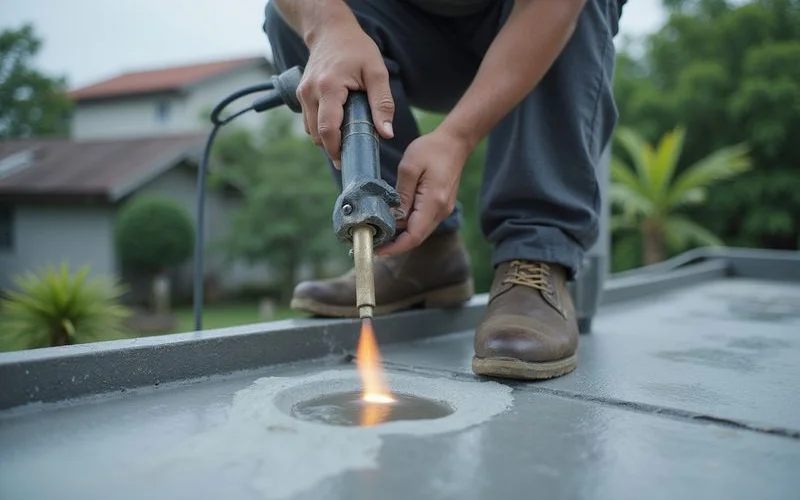
Top Flat Roof Methods
A quick comparison highlights the most common applications used across the Klang Valley.
| Waterproofing Method | Application Style | Best Use Case |
|---|---|---|
| Torch-On Bituminous Membrane | Heat-welded rolls (APP or SBS) | Standard residential and commercial flat roofs. Highly durable. |
| PU (Polyurethane) Coating | Liquid roller application | Complex roof shapes with many pipes or vents. Continuous finish. |
| Acrylic Coating | Liquid roller application | Budget-friendly colour refreshes. Less resistant to standing water. |
| Cementitious Waterproofing | Cement-based slurry | Negative pressure areas or under-tile applications. |
Our preferred workhorse for a typical Petaling Jaya landed home is the torch-on membrane. A thick layer of Atactic Polypropylene (APP) modified bitumen resists the harsh tropical sun brilliantly. It handles minor structural movements without snapping.
Durability comparison
Both tile and flat roof systems provide excellent longevity when installed correctly. Material failure is extremely rare. The vast majority of leaks stem from sloppy application or neglected maintenance.
Our maintenance crews notice failures that stem from the exact same causes on hundreds of local properties. You can easily extend the life of your roof by watching for early warning signs.
Common Failure Points
- Cement ridge cracking: Extreme daily temperature shifts cause the rigid bedding on tiled roofs to flake away.
- Junction flashing separation: Metal sheets pull away from wall junctions over time.
- Membrane edge lifting: The standard 10 to 15-year lifespan of a flat roof torch-on membrane often ends prematurely at the seams.
- Accidental punctures: Air conditioning contractors frequently drop tools on the flat membrane, creating immediate leaks.
These localised flat roof issues are highly repairable if caught early. You rarely need to tear off the entire system for a single puncture.
Cost considerations
When evaluating tiled vs flat roof waterproofing costs, the exact price ranges significantly based on the total square footage. Targeted patching requires far less material than a complete system overhaul. Access difficulties will also impact the final labour price.
Our pricing models reflect current 2026 market rates in Malaysia. A full torch-on membrane replacement currently averages between RM8 and RM15 per square foot. Liquid polyurethane systems cost slightly more.
Price Impact by Repair Scope
- Targeted tiled roof repair: Re-bedding a specific ridge and replacing local flashing keeps costs low. This addresses the exact failure point without wasting materials.
- Spot flat roof treatment: Injecting polyurethane resin into a single concrete crack is highly affordable.
- Full flat roof re-waterproofing: Replacing the entire membrane is a major investment. This continuous layer guarantees long-term protection.
- Complete tile underlayment renewal: Stripping off all tiles to replace the aged membrane is an expensive and labour-intensive project.
We strongly recommend reading our patch vs full waterproofing guide to understand this trade-off. The right scope of work depends entirely on whether the failure is isolated or systemic.
Malaysian climate factors
The local climate heavily stresses exterior building materials through extreme heat and heavy monsoon rainfall. Daily thermal shock causes constant expansion and contraction across the entire structure. A roof might reach 40 degrees Celsius by noon and rapidly cool during a sudden thunderstorm.
Our technicians find that local weather patterns expose every single weakness in a building. The heavy rains from May to September will exploit a hairline crack in minutes.
Managing Monsoon Risks
Flat roofs face an aggressive threat from water ponding during these storms. A high-quality torch-on system tolerates standing water for short periods. Effective built-in drainage is still absolutely essential to move that water off the slab.
Tiled roofs face different monsoon hazards. Wind-driven rain easily pushes under loose flashing at the roof junctions. Aged underlayment will let that moisture drip directly onto your plaster ceiling.
We always suggest scheduling a quick inspection before the heavy rains begin. Catching a cracked ridge tile in March is vastly cheaper than replacing a collapsed ceiling in November.
Protecting your property long-term
Choosing between the available roof waterproofing methods comes down to matching the right materials to your specific building. A fast repair now prevents massive structural headaches down the road.
Our experts are ready to assess your property and provide a clear action plan. Contact us today to schedule an inspection before the next heavy rain hits.